Play · Growth · Human Flourishing·Powered by AI
Moses Silbiger, MA
Researcher - AI · Interactive Entertainment · Developmental Psychology

Research Trajectory - Original & Current


Trajectory: The Research, Original & Current
The Science and Vision Behind Press Play to Grow!


"People don't know what they want until you show it to them." - Steve Jobs
When Steve Jobs introduced the iPhone in 2007, he wasn't responding to demand. No one was asking for it. No one knew to ask.
The iPhone wasn't a better phone, or a better camera, or a better way to browse the internet. It was something entirely new that emerged
from the convergence of all three - and that convergence produced an experience that none of the parts could have created separately.
Press Play to Grow! is built on the same logic.
Nobody is asking for interactive entertainment designed to catalyze human development. They don't know they need it yet,
or how much better their lives could be once they have it. That experience hasn't been built. But the pieces that would make it
possible are all on the table - and they have never been more ready to come together than right now.
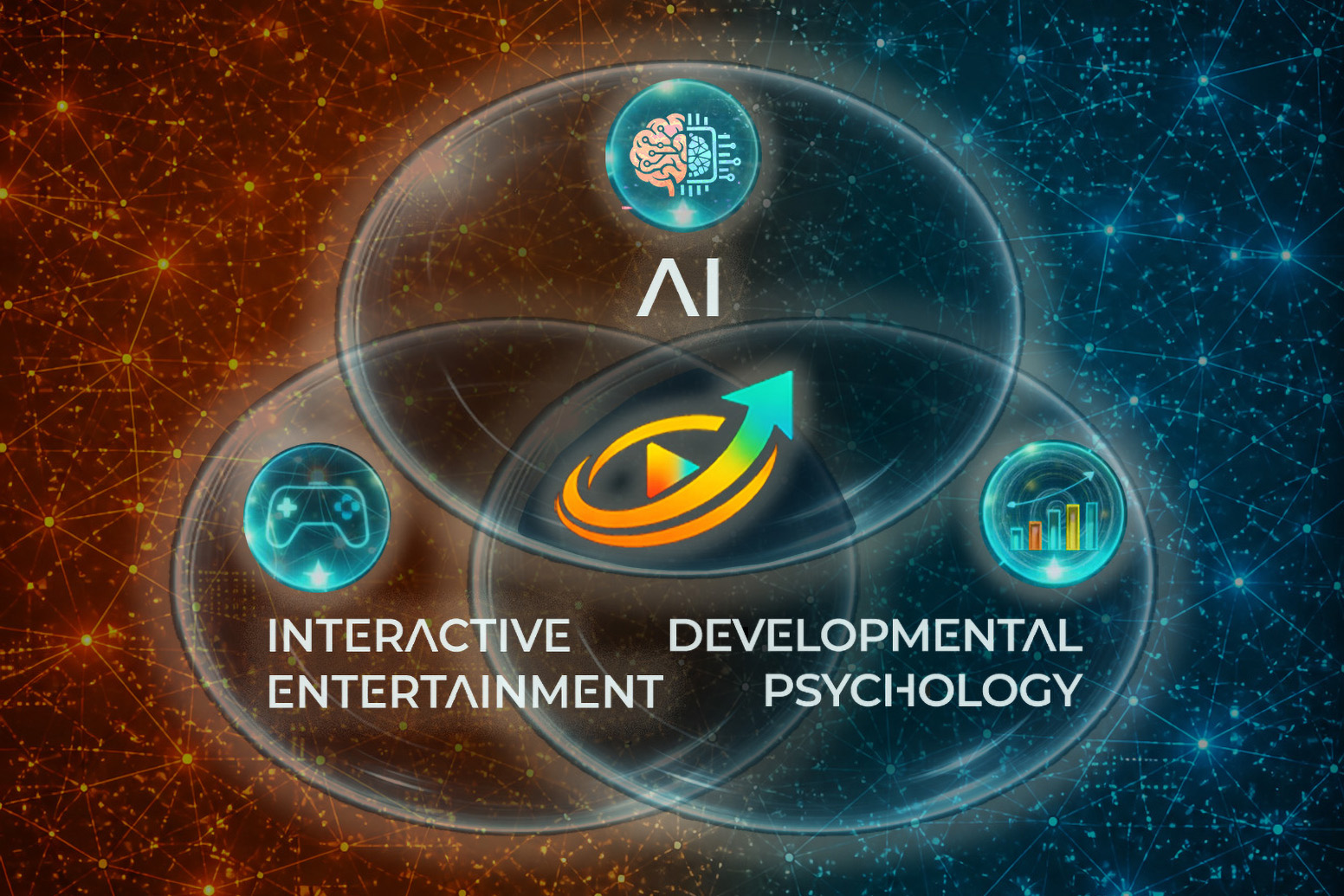
Those three pieces are Interactive Entertainment, Artificial Intelligence, and Developmental Psychology.
Each one extraordinary on its own. Each one incomplete without the others. And their convergence -
like the iPhone's convergence of phone, camera, and internet - has the potential to produce something that none of them,
working alone, could ever create.

Where It Started
In 2008, a rigorous mixed-methods study was conducted at John F. Kennedy University in San Francisco - possibly the first cross-disciplinary academic investigation into the convergence of all three fields. AI was not yet part of the conversation, not because it wasn't present, but because no one was calling it that.
At the Game Developers Conference that same year, Ray Kurzweil observed that the video game industry was the most technologically advanced in the world -
and the intelligence already driving that sophistication, adaptive difficulty, procedural generation, responsive systems, was AI in everything but name.

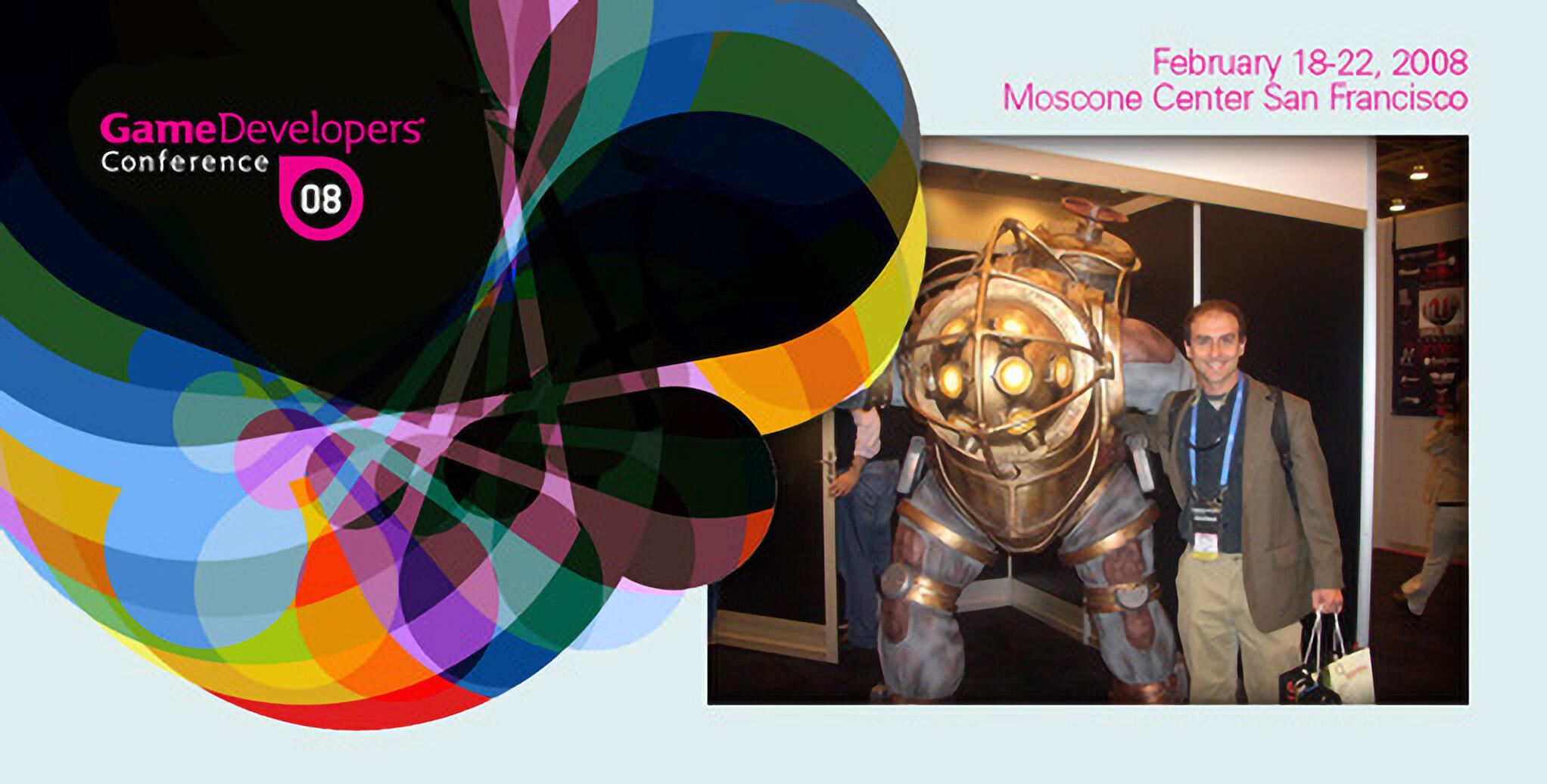

Game Developers Conference (GDC)
San Francisco·2008 - Where it all started

It was published two years later by SUNY Press in the Journal of Integral Theory and Practice (JITP), alongside work by leading researchers in the integral field.
The research itself went into hibernation after 2010. But the vision didn't stay still: it surfaced again in 2011, when a story built on the framework
was submitted independently through a crowdsourced storyboard platform created by Will Wright*(acclaimed game designer, creator of SimCity,
The Sims & Spore), and selected for broadcast as an awarded episode on Current TV.
The same framework resurfaced once more in 2024, applied to a conceptual, play-like simulation for dual-use (Civil Rescue/Emergency + MilitaryTraining/Psychology/PTSD), intended as a proposal to the Department of Defense (DoD).
Each time, the framework proved relevant well beyond what the available technology, or the circumstances, could fully realize.
It isn't anymore.
UPCOMING


Three Fields Converging, One Unprecedented Framework
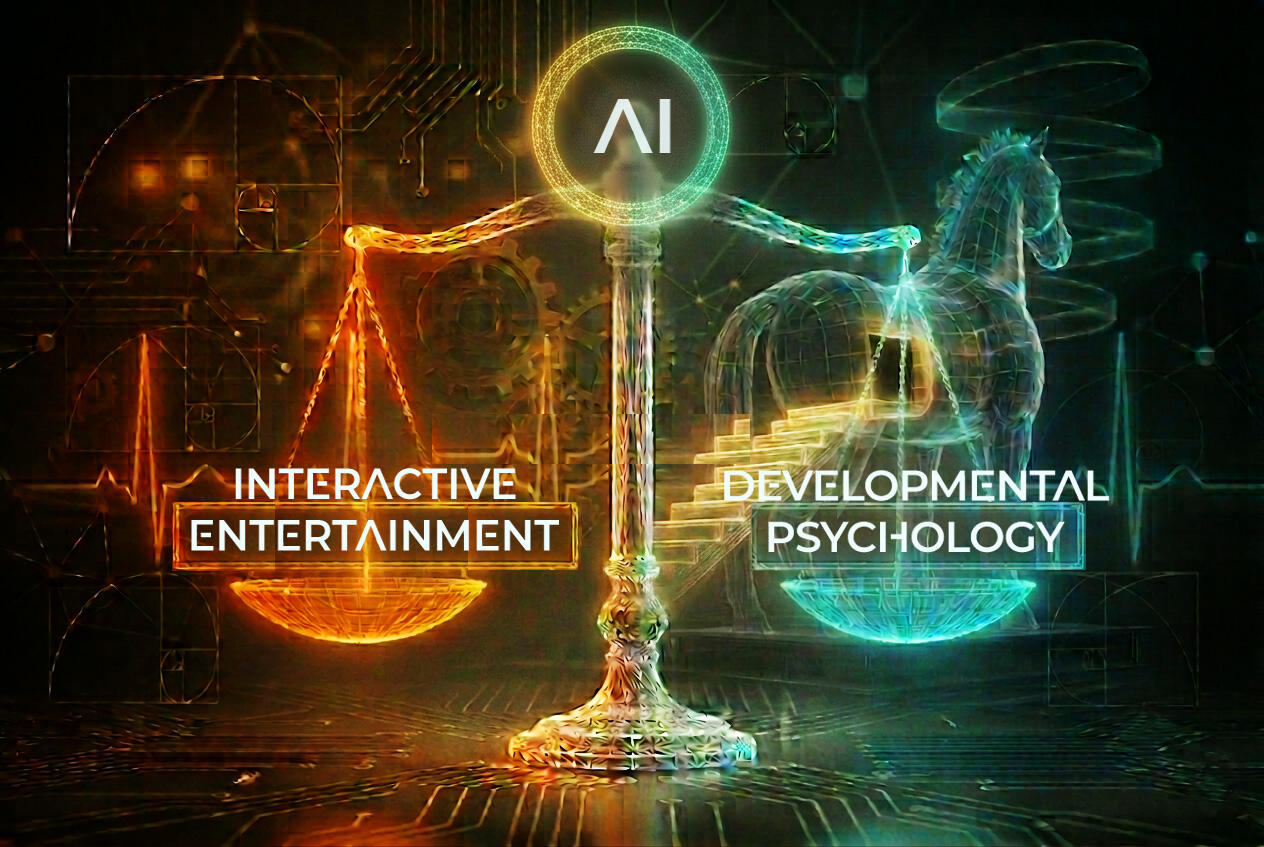

The Press Play to Grow! Convergence
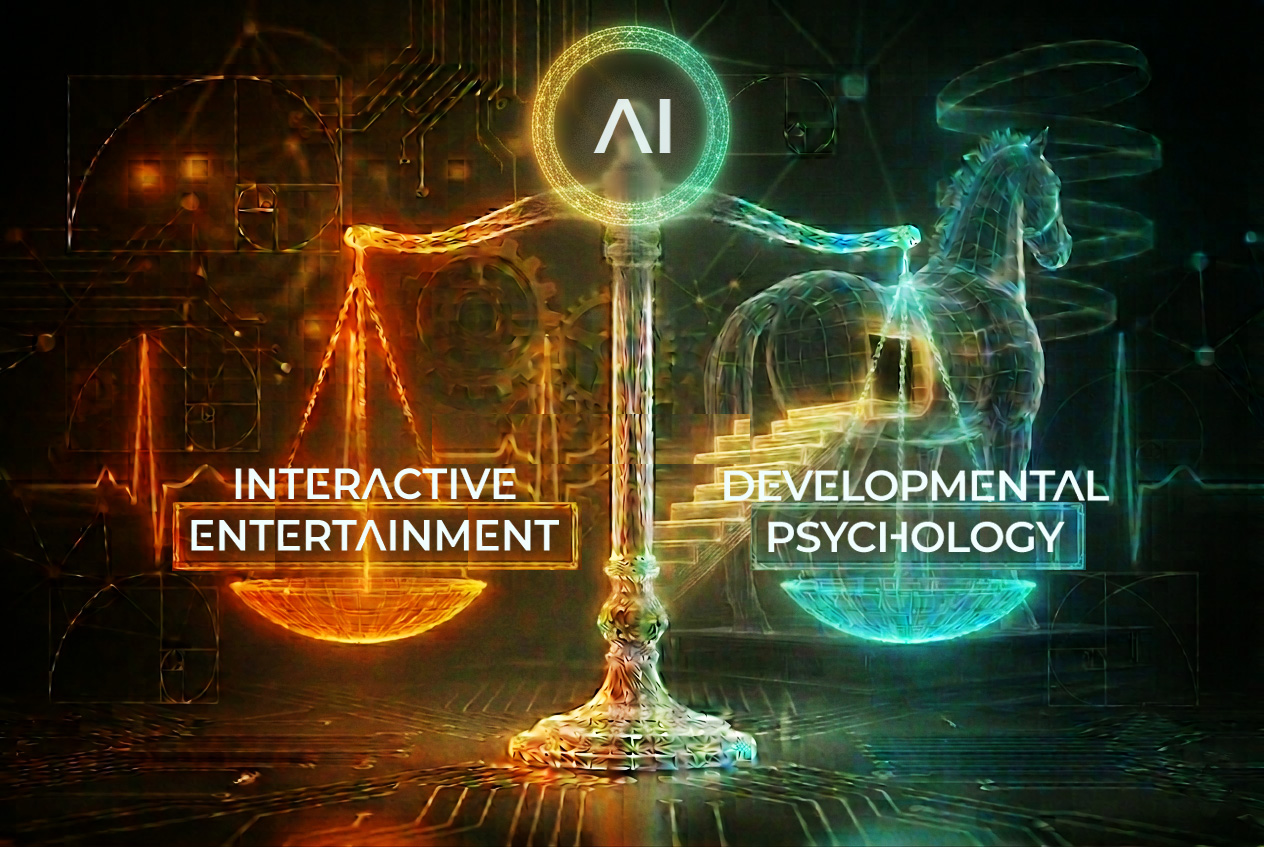
AI at the fulcrum, holding in balance
Interactive Entertainment & Developmental Psychology

That original idea, the seed, hibernating and resurfacing across fifteen years, continued to incubate and never stopped pointing in the right direction.
What's changed is everything around it, especially on the technological front.
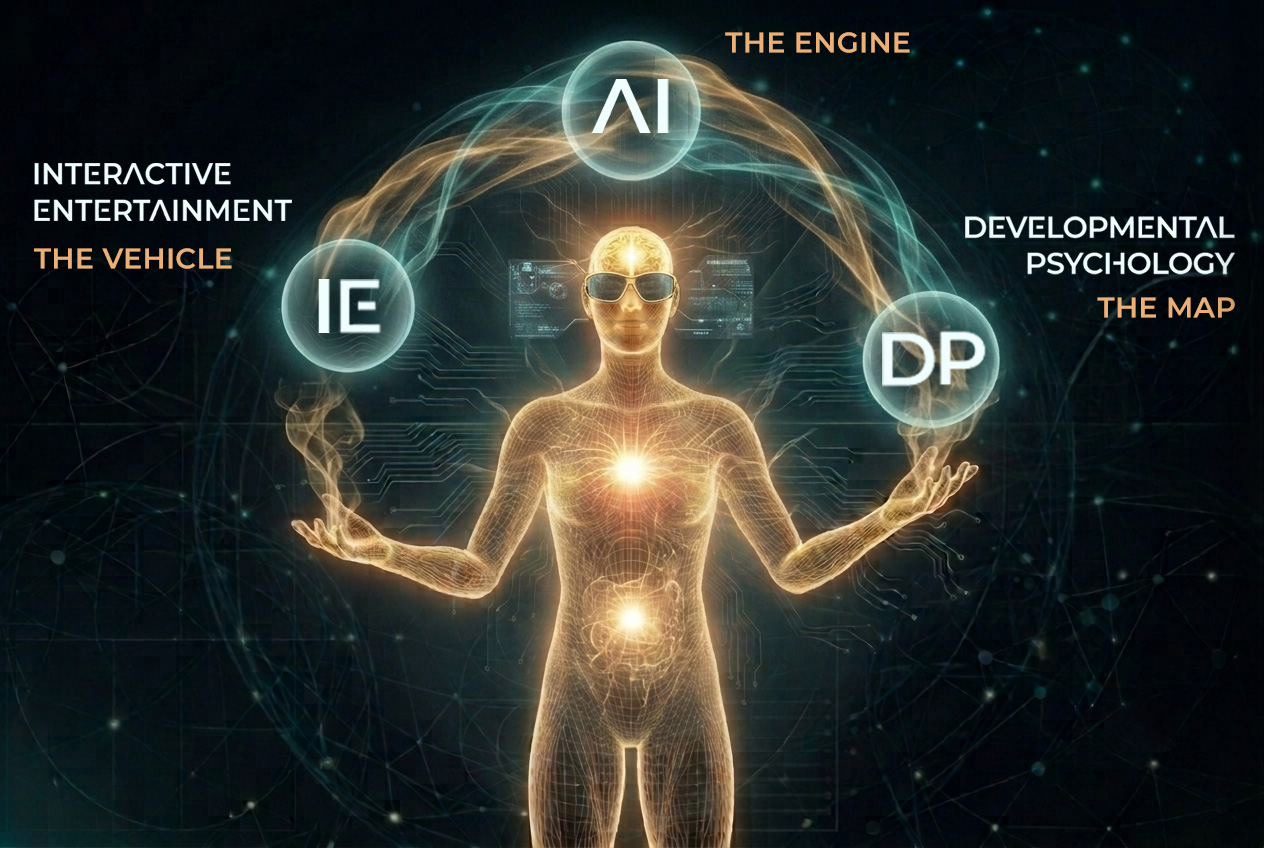
Press Play to Grow! stands at the convergence of three fields:
Interactive Entertainment, the Vehicle
Artificial Intelligence, the Engine
Developmental Psychology, the Map
Each has transformed dramatically since its inception around 2008-2010.
Together, they are now ready to do what no single one of them could do alone.

Interactive Entertainment
The Vehicle

The industry has built extraordinary tools - adaptive AI, immersive XR, real-time emotional sensing, experiences that reach billions of people globally.
What it hasn't yet built is a comprehensive map of the human being it's designing for.
And XR, the most immersive medium ever created, is still waiting for its 'killer app'.
Press Play to Grow! proposes what that experience could be.

Developmental Psychology
The Map

The field that tells the engine where to go.
A comprehensive framework for how human beings actually grow - across cognitive, emotional, behavioral, ethical, kinesthetic,
and experiential dimensions simultaneously - is what transforms engaging entertainment into something that genuinely develops
the whole person.


Artificial Intelligence (AI)
The Engine

AI can now read emotional and cognitive states in real time through multi-modal interfaces - voice, expression, behavior - and adapt
experiences to individual patterns accordingly. Spatial computing and immersive technology are opening new terrain for human-in-the-loop,
AI-guided experience.
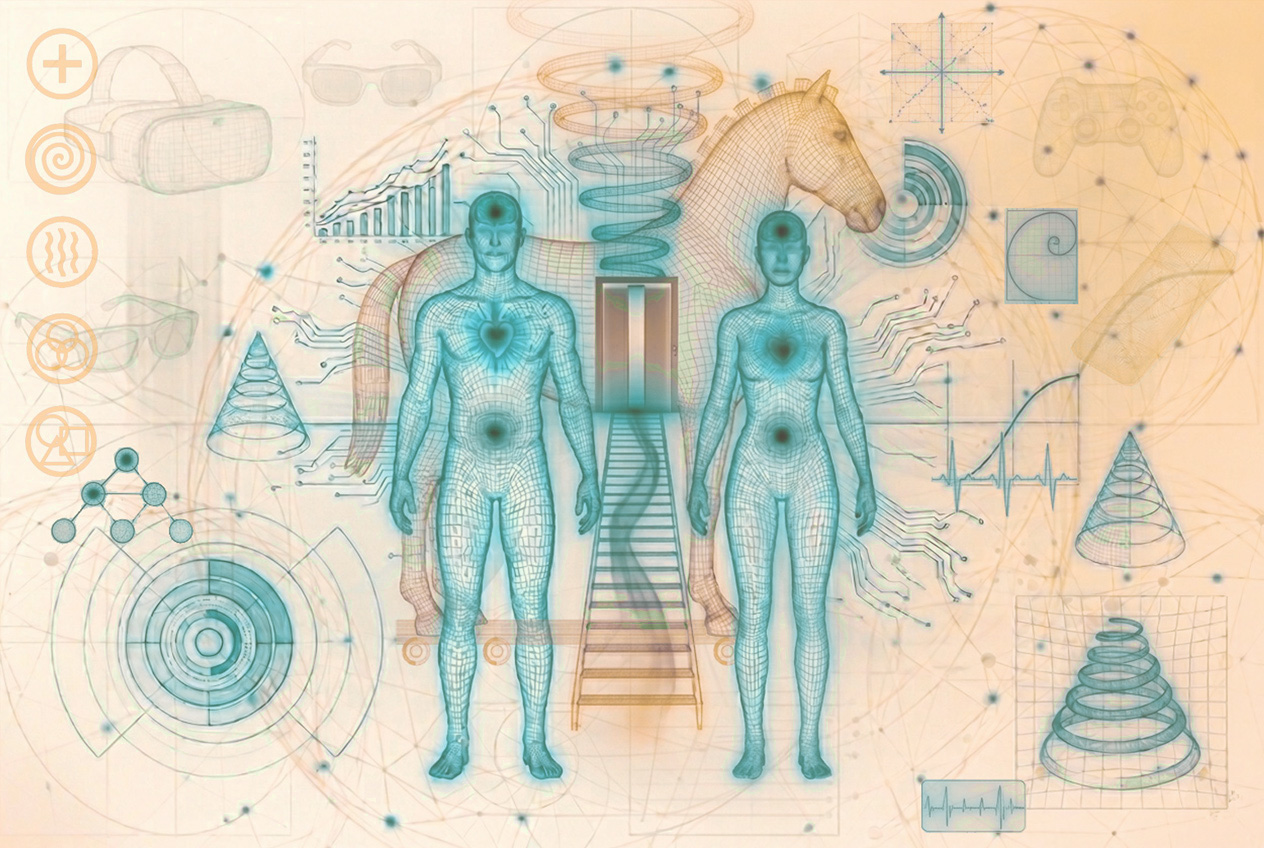
AI provides the engine, the technical infrastructure for a genuine 'Trojan Horse' experience - one that grows you invisibly, inside something
you'd choose freely because it's genuinely great - and that infrastructure now exists.
But what the engine needs to catalyze human flourishing is a map, and a proper vehicle.
Enter Developmental Psychology & Interactive Entertainment

“Video games can function as 'Trojan Horses' for developmental growth,
embedding structured transformation within engaging interactive systems.”

Original Research
Where It All Started

In 2008, before AI was a household word and before spatial computing existed, a research framework was proposed that mapped the developmental potential
of video games through an integral lens.The original Press Play to Grow! research examined 12 games across six methodologies:• Phenomenological - What the experience feels like from the inside
• Firsthand immersive play across 13 games through a developmental lens• Structural - How the player's developmental stage shapes perception
• Developmental self-assessment through Enneagram, Myers-Briggs, and Cook-Greuter's MAP• Hermeneutical - How games communicate meaning
• Conversations with Ken Wilber, integral thinkers, and game designers• Ethnomethodological - How the game community and culture operates
• Five full days as participant-observer at GDC 2008 with 16,000+ attendees• Empirical - What the data from 150 participants revealed
• Comparative survey of 150 participants across three groups• Systems Analysis - How all the dimensions interact as a whole
• Examination of educational, cultural, and economic systems surrounding interactive entertainment
Peer-reviewed, published in the Journal of Integral Theory and Practice, and presented at three conferences - Games Learning Society (University of Wisconsin-Madison), Meaningful Play (Michigan State University), and the Integral Theory Conference (John F. Kennedy University).The vision it produced - INDENTRO, now AiPLAYVOLVE! - was ahead of its time. The technology has finally caught up.

Research Evidence
Deep Dive
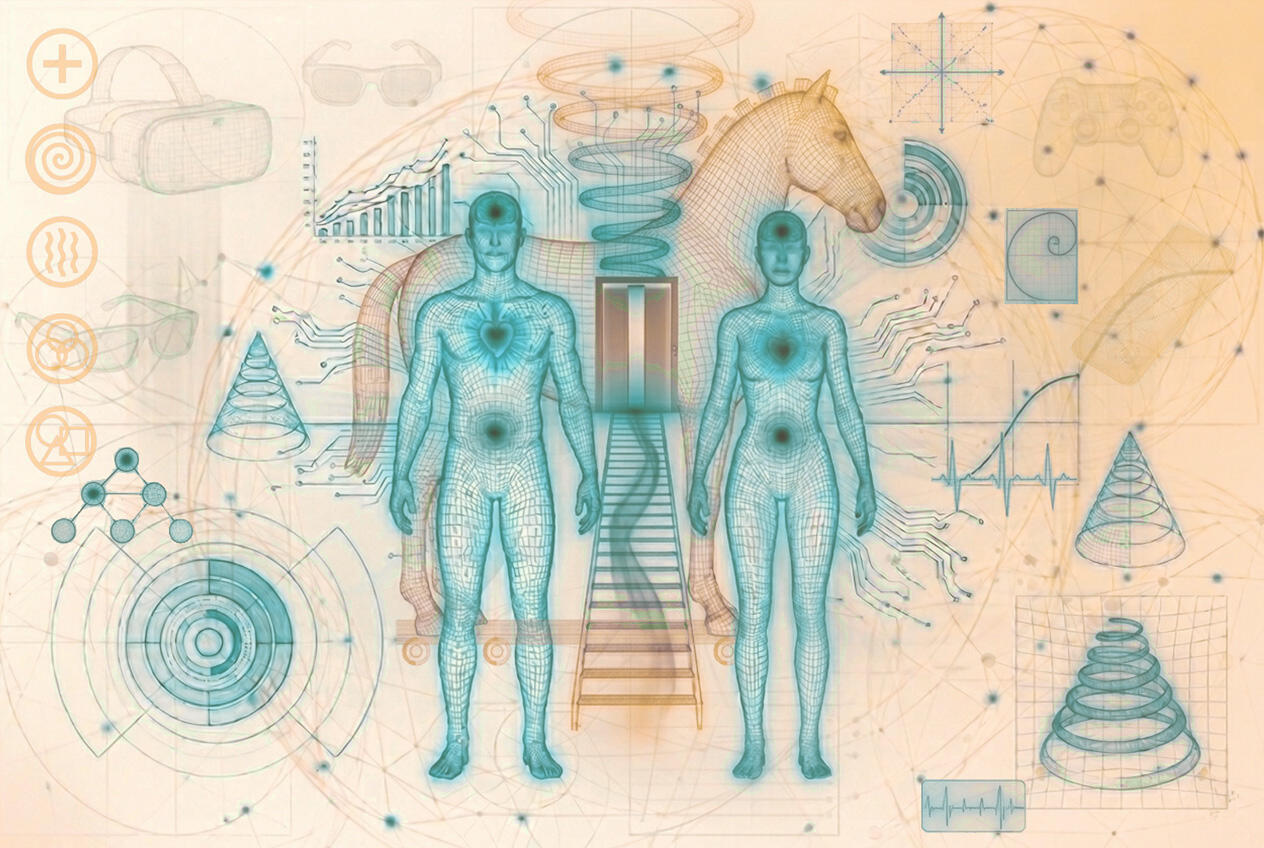
The original Press Play to Grow! research applied six simultaneous methodologies to a single question:
How could interactive entertainment be intentionally designed to catalyze human development?This page goes beyond the story - showing the actual artifacts, data tables, survey findings, methodology diagrams, and interview insights the research produced.This section provides the full evidentiary foundation for everything Press Play to Grow! proposes.The evidence was there in 2008. What follows is the proof.

Site Architecture
Home



Gateway Pages







Research Trajectory · Deep Dive






Communication · Many Channels






contact
On the same wavelength?
If this research resonates with you - whether you work in AI, Interactive Entertainment,
or Developmental Psychology, or simply want to connect as a kindred spirit - let's talk.


Research Trajectory - Original & Current

© 2026 Press Play to Grow! All rights reserved.